
How to play Cold Crime
Cold Crime gives you one thing: the phone of someone at the center of a case. Everything you need to solve it is somewhere inside. This guide shows how a case works, from the first message to the accusation.
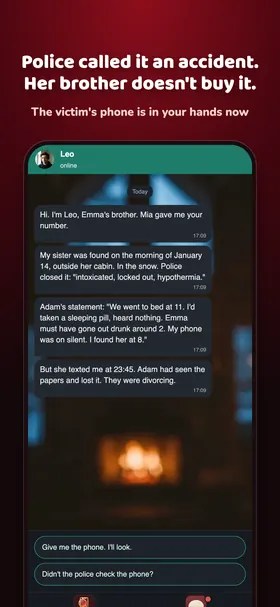
1. Read the first messages
Every case opens with a chat. Someone close to the victim tells you what happened, what the police decided, and the one detail that doesn't fit. Read it carefully. The small things they mention often matter later.
You can reply with the options that appear at the bottom of the chat, and your contact will tell you more.
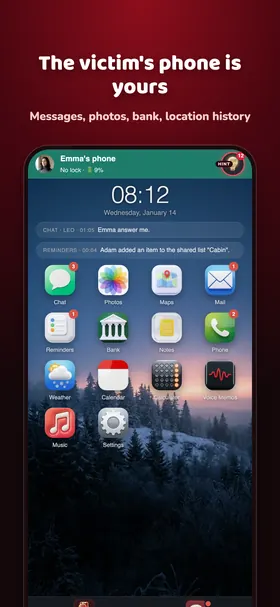
2. Open the phone
Switch to the phone tab and you get the full home screen: chats, photos, maps, mail, bank, notes, reminders, calendar and more. Each case has its own set of apps, chosen for that story.
Look at times, read receipts, notification banners and the small print. Detectives in Cold Crime solve cases with the boring details: a payment, a step count, a Wi-Fi log, a calculator history.

3. Unlock what is hidden
Some albums and notes are locked. The code is never random. People use birthdays, anniversaries and numbers that matter to them, and the phone usually tells you which one if you look in the right place.
Deleted messages don't always disappear either. Sometimes the other side of the conversation still has them.
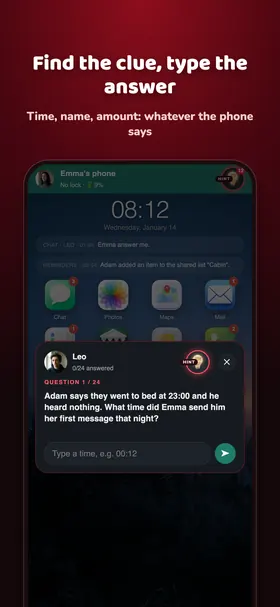
4. Answer in your own words
Your contact asks questions one at a time. Type what you found: a time like 00:12, a name, an amount or a place. You don't have to match an exact format. For names and places you can also tap a contact, a map pin or a photo.
Stuck? Tap the hint button. The first hint gives a nudge, the second tells you where to look, and the third gives you the answer.

5. Name the killer
When the evidence holds, open the accusation screen and choose. Be sure before you accuse. The case closes when you name someone.
In cheating cases the question is different, but the method is the same: follow the times and the places until only one story still makes sense.
Detective tips
- Make a timeline. Most cases turn on a few minutes. Write down who did what, and when.
- Trust the phone, not the statements. People lie in chats. Location, payments and health data usually don't.
- Check both sides. A message deleted on one phone may still be sitting in another chat.
- Read the notifications. The lock screen often shows what arrived after the owner stopped looking.
- Use hints early if you need them. A nudge keeps the story moving and still lets you solve it yourself.